
Fin Tales
Ages 4–7
Beginner books for first-time readers
Stories kids love, written for how children learn to read. Every word on every page is one your child can sound out.
Inside the Method
See the science ↓- Phonics, step by stepLetter sounds, in a set order.
- Small steps, never a leapOne new sound at a time.
- Repetition, by designEvery new word, again and again.
- Sentences that can’t be guessedYour child reads every word.


Meet the gang

Lass

Tam

Fin

Tif

Moss

Mel
Cute characters. Serious instruction.
The science of first-time reading
A phonics-based approach. Every choice in these books follows what decades of reading research have found works best for beginning readers.
Sentences that can’t be guessed9
The sentences are written so they can’t be predicted from the picture or memorized from the page before. Your child has to read every word.
Set 1 · The reading path
The first twenty books
Thoughtful sequencing. Each book teaches a little more.3,4
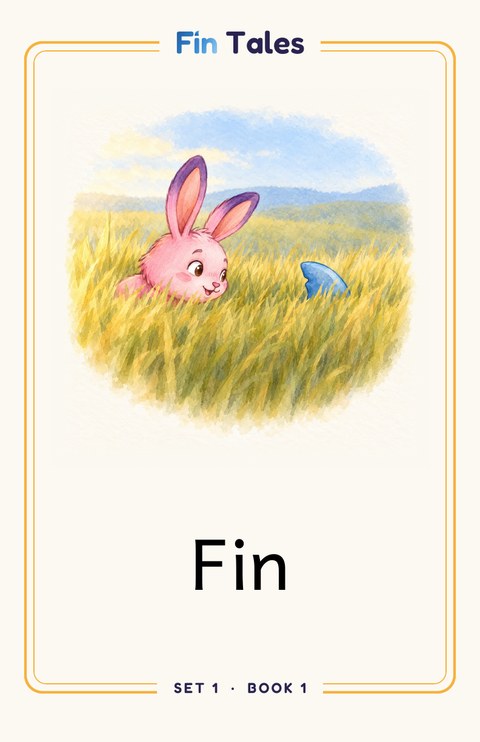
- Book 1Fin
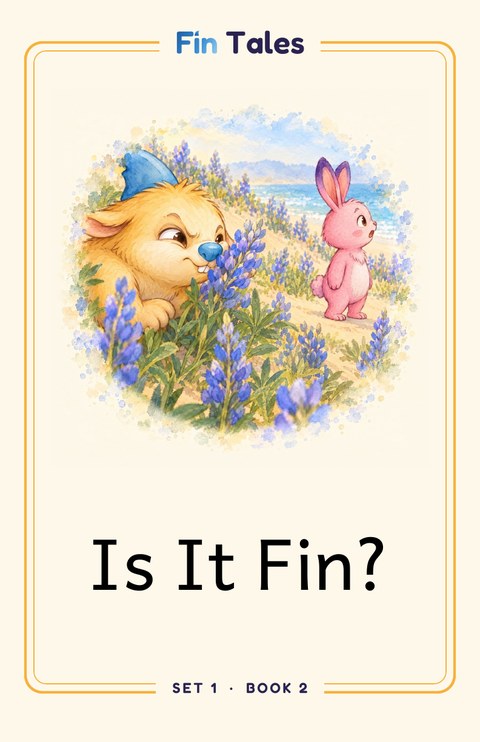 Book 2Is It Fin?
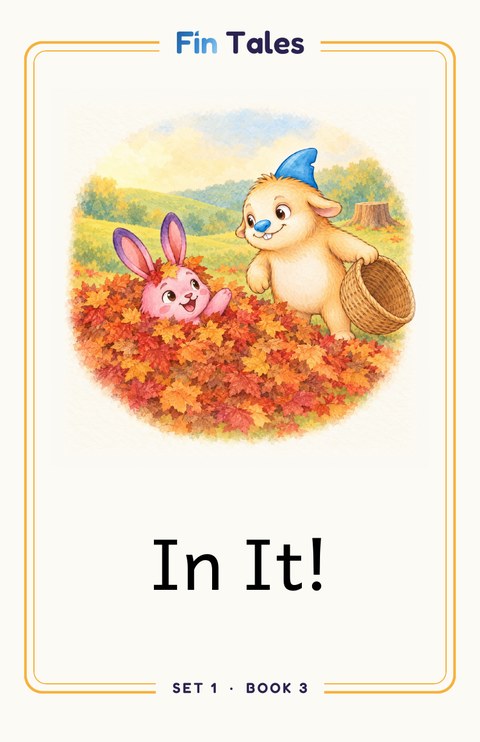 Book 3In It!
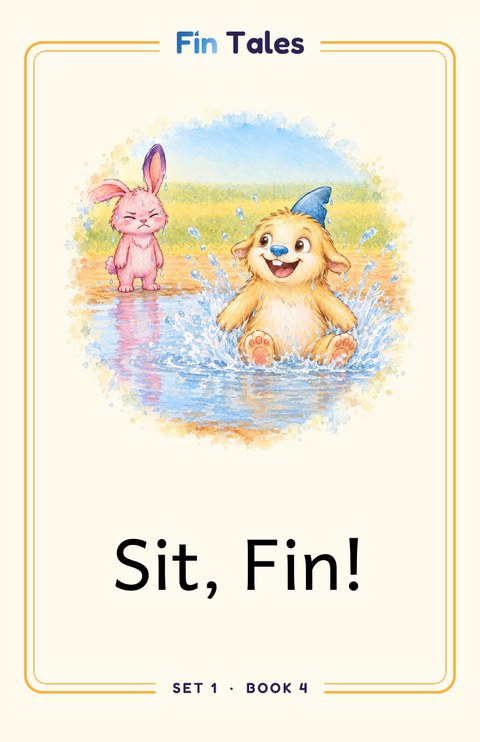 Book 4Sit, Fin!
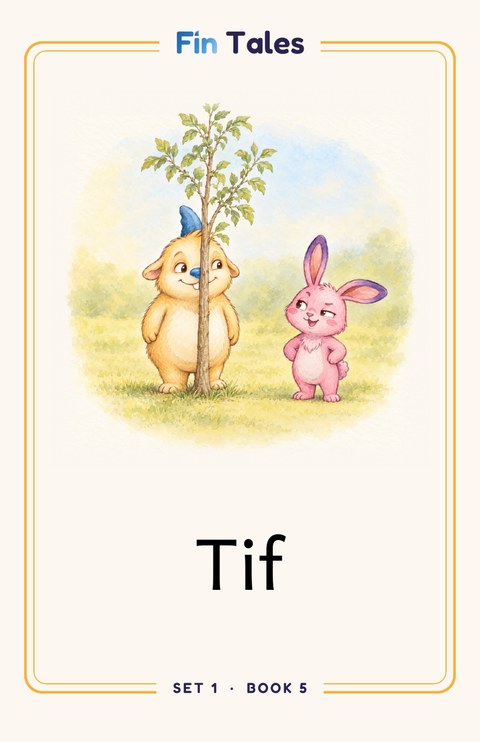 Book 5Tif
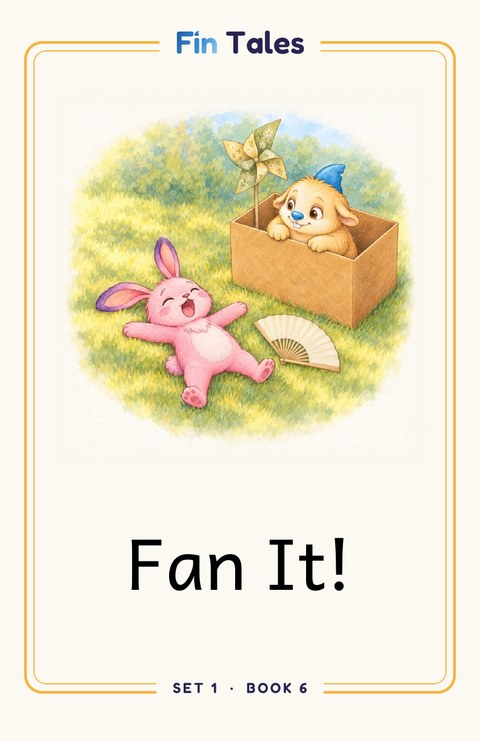 Book 6Fan It!
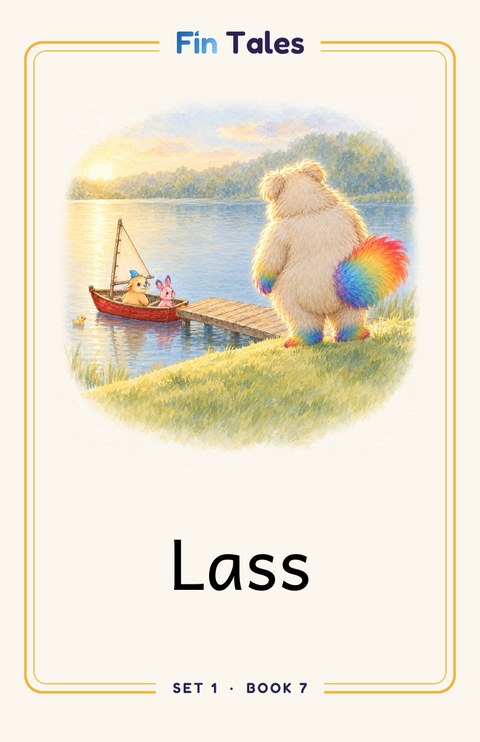 Book 7Lass
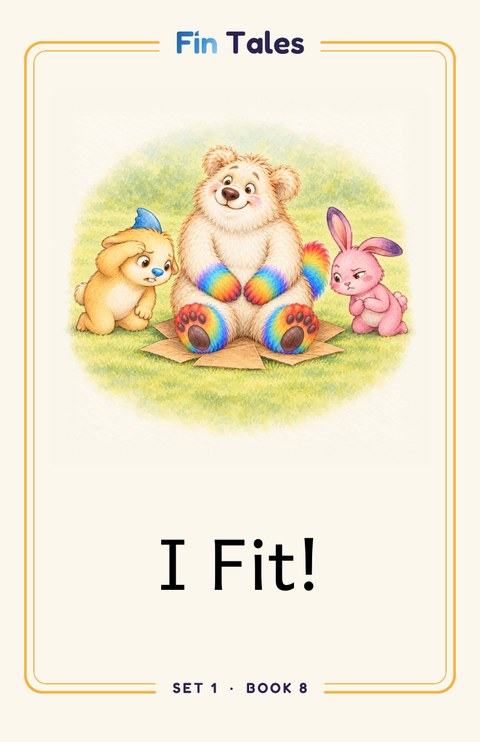 Book 8I Fit!
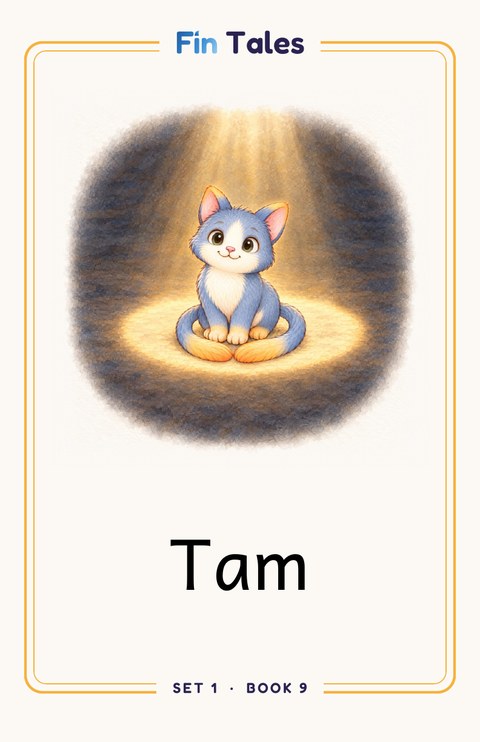 Book 9Tam
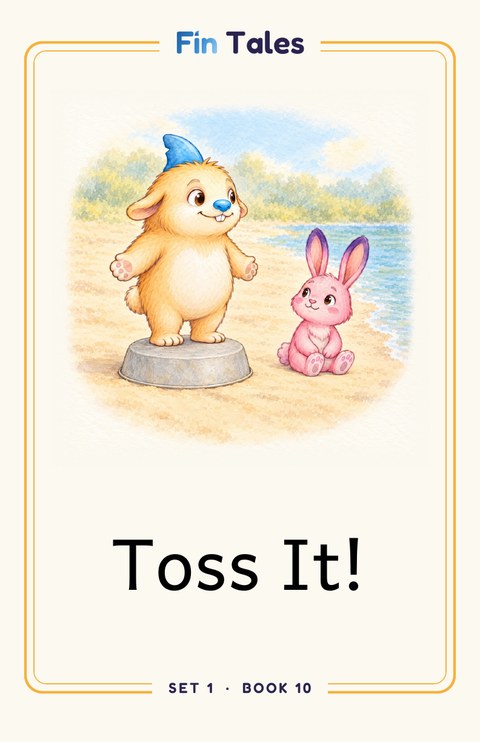 Book 10Toss It!
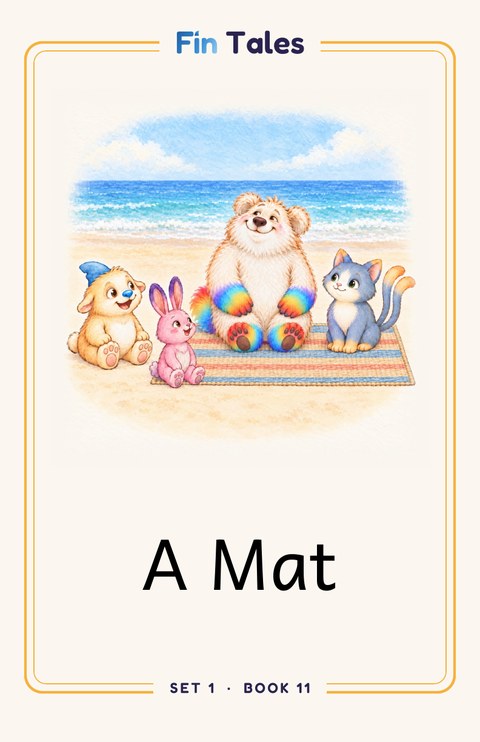
- Book 11A Mat
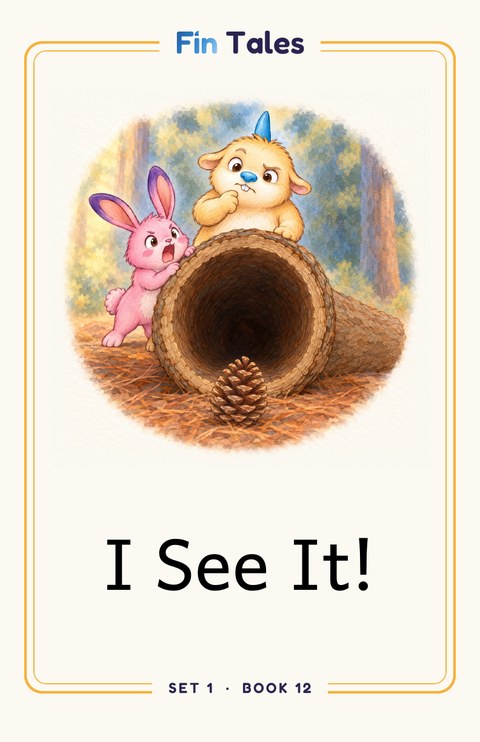 Book 12I See It!
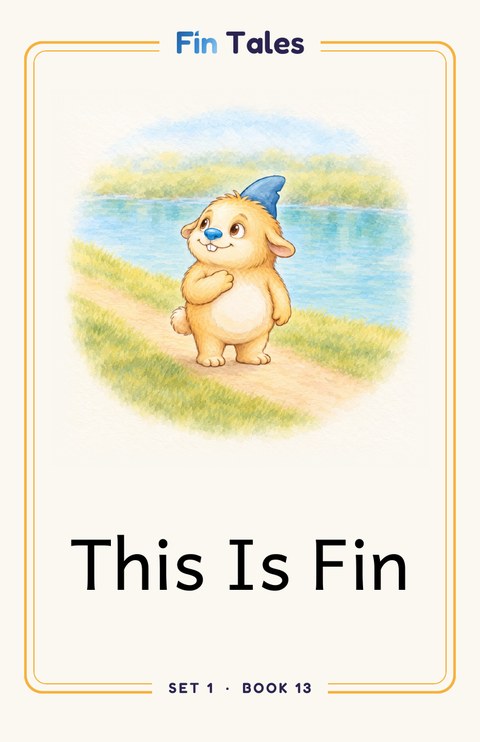 Book 13This Is Fin
 Book 14Fan Me!
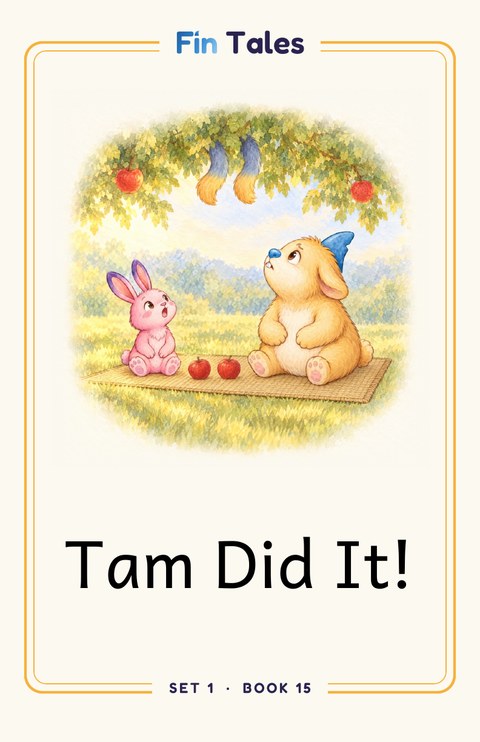 Book 15Tam Did It!
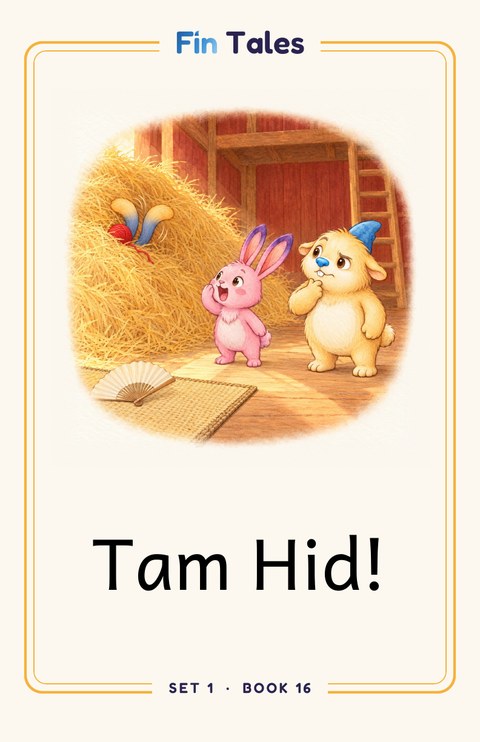 Book 16Tam Hid!
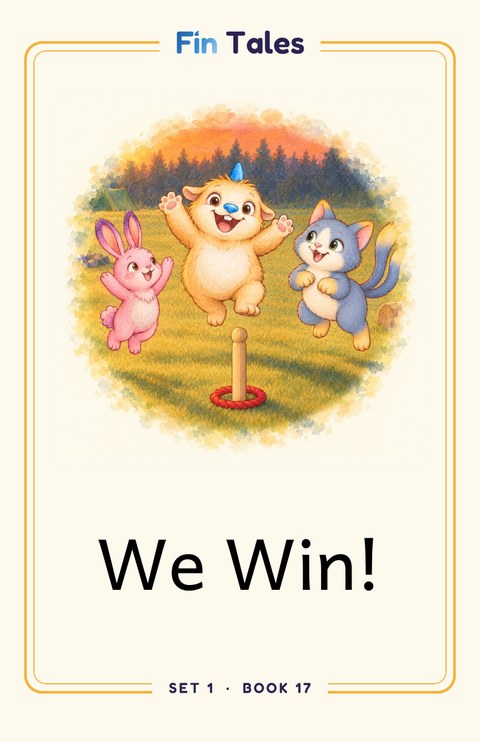 Book 17We Win!
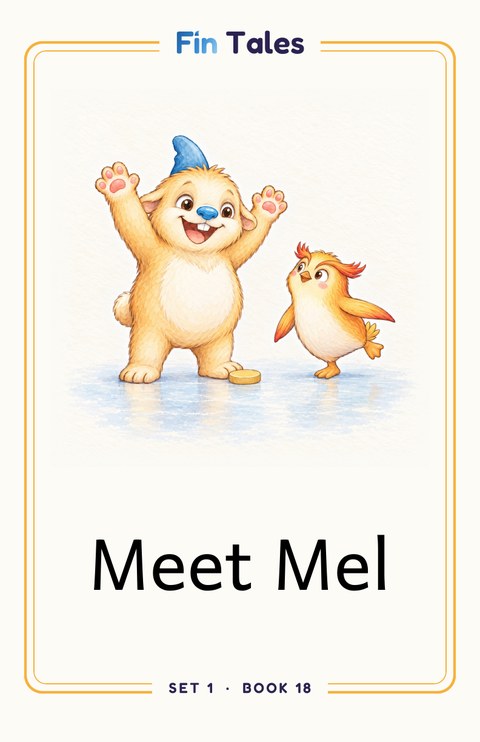 Book 18Meet Mel
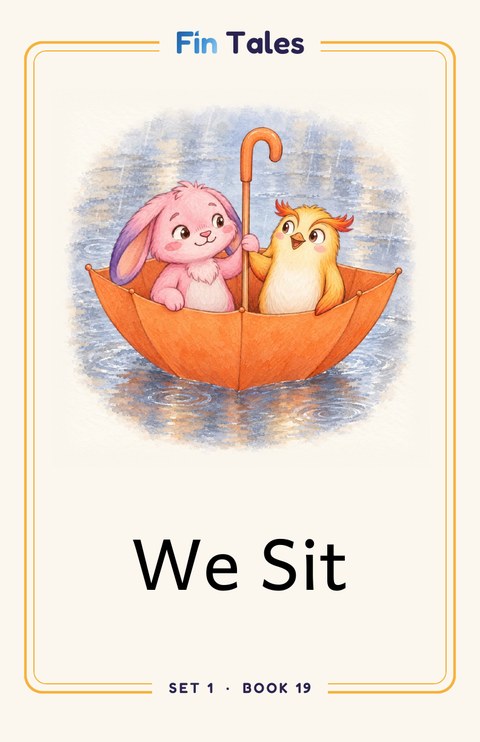
- Book 19We Sit
 Book 20Will Lass Fit?
Tips for grown-ups
You don’t need to be a teacher: children taught at home by a parent get a real head start.8
-

“Look at the letters.”
Point under every word
-

“Fffiiinnn… Fin!”
Stretch it, then say it fast
Hold each sound into the next with no gaps (fffiiinnn), then say it quickly: Fin.12
-

“Try again.”
Point out mistakes right away, kindly
Tap under the word and let them have another go.4
-

“Let’s read it one more time.”
Read it twice
-

“You sounded out every word!”
Praise, and stop while it’s fun
Name what they did well.10 Ten minutes a day beats an hour on Sunday.7
-

“You earned a sticker!”
Add a sticker after every read
Each book has a sticker page, with a spot for every read.
Make the letter and word cards
Every book starts with a two-minute warm-up on index cards: its new letters and words, then a few old ones. Set 1 uses 50 cards, numbered in the order the books teach them. Make them at home in an evening, or order the printed set.
See all 50 cards

How it all began
About the company
My mom was an elementary school teacher with a passion for teaching kids to read. Year after year, she saw what worked in her classroom, and what didn’t. She taught my sister and me to read when we were four.
She used the I See Sam books, developed by education researchers at SWRL, a federally funded lab in Southern California. They tested the program in kindergarten classrooms, improved it based on the results, and by the mid‑1970s it was in more than 2,000 schools. Why did it work? It taught one new sound at a time, and every step built on the one before.
I went on to study at the Stanford Graduate School of Education and learned the science of reading – concepts like scaffolding, encoding, and consolidation – so you don’t have to. All of these learning concepts inform the Fin Tales series. When I became a dad, I taught my own two kids the same way, starting at age four. Every night before bed, we’d curl up and read together for ten minutes. It wasn’t always easy, but by the time they were five, both were reading at a first-grade level. By the time they were six, they were reading at a third-grade level.
I started The Reading Company so other families can have that same start. We teach children to read the way that works best, and show parents exactly how to help. Fin Tales is how we do it: the same step-by-step approach, with new stories, new friends, and art that makes kids want to turn the page.
Michael Duca, Founder

The research behind the method
- National Reading Panel (2000). Teaching Children to Read: An Evidence-Based Assessment of the Scientific Research Literature on Reading and Its Implications for Reading Instruction. National Institute of Child Health and Human Development.
- Ehri, L. C., Nunes, S. R., Stahl, S. A., & Willows, D. M. (2001). Systematic phonics instruction helps students learn to read. Review of Educational Research, 71(3), 393–447.
- Cheatham, J. P., & Allor, J. H. (2012). The influence of decodability in early reading text on reading achievement: A review of the evidence. Reading and Writing, 25(9), 2223–2246.
- Foorman, B., et al. (2016). Foundational Skills to Support Reading for Understanding in Kindergarten Through 3rd Grade (NCEE 2016-4008). Institute of Education Sciences, U.S. Department of Education.
- Share, D. L. (1995). Phonological recoding and self-teaching: Sine qua non of reading acquisition. Cognition, 55(2), 151–218.
- Ehri, L. C. (2014). Orthographic mapping in the acquisition of sight word reading, spelling memory, and vocabulary learning. Scientific Studies of Reading, 18(1), 5–21.
- Cepeda, N. J., Pashler, H., Vul, E., Wixted, J. T., & Rohrer, D. (2006). Distributed practice in verbal recall tasks: A review and quantitative synthesis. Psychological Bulletin, 132(3), 354–380.
- Sénéchal, M., & LeFevre, J.-A. (2002). Parental involvement in the development of children’s reading skill: A five-year longitudinal study. Child Development, 73(2), 445–460.
- Castles, A., Rastle, K., & Nation, K. (2018). Ending the reading wars: Reading acquisition from novice to expert. Psychological Science in the Public Interest, 19(1), 5–51.
- Hattie, J., & Timperley, H. (2007). The power of feedback. Review of Educational Research, 77(1), 81–112.
- Justice, L. M., Pullen, P. C., & Pence, K. L. (2008). Influence of verbal and nonverbal references to print on preschoolers’ visual attention to print during storybook reading. Developmental Psychology, 44(3), 855–866.
- Gonzalez-Frey, S. M., & Ehri, L. C. (2021). Connected phonation is more effective than segmented phonation for teaching beginning readers to decode unfamiliar words. Scientific Studies of Reading, 25(3), 272–285.